Loss of Gravity: The Pieces She Left Behind, Part 2 of 5.
Connective tissue
My mother’s disease was impossible to ignore. The severe wasting had stolen nearly every trace of fat and muscle from her body. At five foot seven, she had once seemed tall to me - invincible as only a parent can be. Now, there was almost nothing left but bone beneath skin: the architecture of the woman she had been.
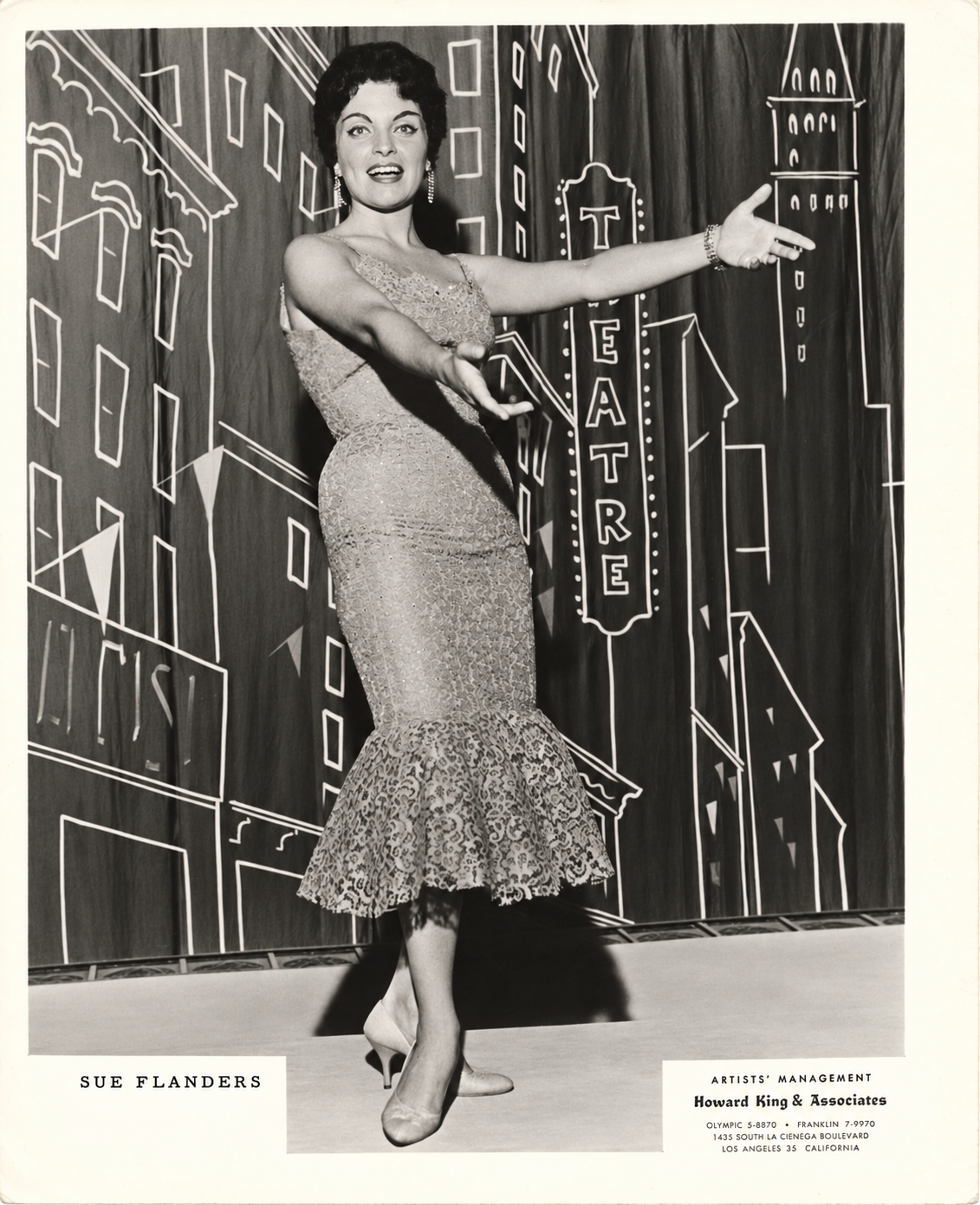
My mother, Sue Flanders, before I knew her.
Cancer had turned my mother’s bones into a site of profound destruction and remodeling. You see, after a certain age, bone is not meant to expand. It’s outer covering is packed with pain receptors, and when a tumor the size of a fist pushes against an unyielding structure, there is nowhere for that pressure to go. Tumor cells and immune cells battle, releasing a deluge of inflammatory chemicals that caused the agonizing pain that stretched across my mother’s face.
My mother didn’t have one fist - size tumor. She had eight.
By then, she was so thin there was no hiding them. They rose beneath her skin, distorting the familiar architecture of her body. You could see where her cancer lived and the look on her face told you what it cost for her to carry it.
Radiation days were good days. The never-ending burden of her tumors would shrink just enough to offer a fragile, fleeting reprieve. On those days, her pain would settle, just enough so she could breath - and so could I. Those radiation days were the only oxygen we had in an otherwise suffocating routine of suffering.
Bone cannot dissolve without consequences. As those fist-sized tumors eroded her skeleton, the very structural foundation of her body began releasing itself into her bloodstream. Calcium flooded her brain, and with it came hypercalcemia - and delirium.
There was a choreography of taking care of my mother that I would like to tell you I mastered. I didn’t. To this day, some part of me still believes I failed her. Like everyone around her, I was barely holding on.
As I stood over the sink, washing the morning’s dishes, my mother rested on the couch, a cup of coffee forgotten beside her, along with the fourth cigarette she had lit and set down God knows where. She had taken to hiding her medication bottles, shoving them between couch cushions or behind a box of macaroni in the cupboard, constantly afraid someone was going to steal them. I lost count of the cigarettes I found burning on chairs, or her blood pressure medication tucked beneath the tissue paper in the bathroom garbage can. Nothing could simply be where she left it, because she no longer remembered where she had left anything.
I still remember how small her voice was, drifting into the kitchen as I finished rinsing out the sink. She spoke with the quiet certainty of someone who had not just finished eating a full breakfast.
“I sure would like some hash browns.”
I enjoyed my mother’s delirium as strange as it may sound. Our conversations were full. My mother was truly interesting, and we would carry on as if we were not currently finishing the second breakfast of the day and I still had yet to find where she had hidden her pain medication.
We talked about everything. Sometimes we laughed. For those moments, it was easy to forget what was happening inside her body - easy to simply sit beside my mother and enjoy her.
And then, after one of those glorious, lovely conversations, she would lean over, place her hand on my knee, and whisper, “Have you seen Cyndi lately? She never comes around.”
Months later, as I stared down at the slip of yellow notepaper my father had handed to me - Your brother called - I began to realize the depth of my mother’s pain.
You see, she had spoken other names during her illness. Names I had never heard of before.
Danny.
Stephen.
Robert.
Joey.
At the time, I had attributed them to the delirium - the calcium, the pain medication, the disease slowly altering what was real and what was not. They were simply more people inhabiting the strange world my mother sometimes disappeared into.
But there, written on that little slip of yellow paper, was one of those names. Danny. My brother.
And suddenly I understood. My mother’s delirium had not created those names. It had unburied them.
Whatever the disease had taken from her - the boundaries of time, the certainty of where she was, even the ability to recognize her daughter sitting beside her - it had also loosened something she spent a lifetime holding shut.
For perhaps the first time, a past my mother had buried so deeply had finally been spoken out loud. Those names weren’t metabolic static; they were the deepest, most carefully guarded secrets of her heart breaking through the cracks of her crumbling physical form.
When the physical connective tissue failed, the emotional connective tissue took over.
The phone hung on the kitchen wall, its cord impossibly long, able to stretch all the way through the living room if necessary. My mother mastered the art of pinning the receiver between her ear and her shoulder, carrying on a conversation relatively unabated while she stirred a pot, opened the oven, or moved from one end of the kitchen to the other. Meanwhile, her children mastered the art of limbo, ducking beneath that stretched cord in hopes of making it through without becoming tangled.
To be honest, I was not sure this was a phone call I wanted to make.
My mother had been gone only a few months, and the house that had once been filled with the nightly news, the smell of her chili simmering in the Crock-Pot and the permanent haze of cigarette smoke that seemed to settle into every curtain, cushion, and wall had become unbearably quiet. I found my mother in that silence and cherished the moments when the faintest memory of her lotion would wash over me. I would close my eyes and let myself believe she was still there.
For a short while, she had been mine.
But on that note was a phone number to a person who she had also belonged to. If I dialed it, I would have to share her.
I was the daughter who wrung her hands when she was nervous. My hair curled like hers. I had her eyes. Of all her children, I was the only one who looked like my mother. And if I dialed that number, I was being asked to give some of her back.
I picked up the phone and dialed.
“Hello. I’m looking for Danny.”
Silence.
“This is Danny.”